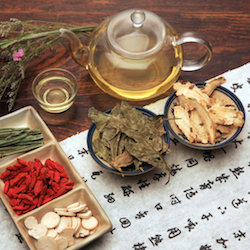
It is estimated by the World Health Organization that 80% of the world population uses herbal medicine. And as healthcare costs rise and incomes decline, many Americans who are not satisfied with western medicine, have turned to alternative and complementary medicine. The authors of this paper cite how Americans are increasingly turning to herbal products and traditional Chinese medicine, especially acupuncture and Chinese herbal medicine (CHM).
Though the authors believe that both western medicine and CHM can be complementary, they make a strong point that each has very distinct modalities and that health care practitioners and pharmacists need to understand how CHM is prepared and the risks patients face by self-medicating. This paper provides insight into basic differences in how herbs are prepared before administration to the patients in China versus a single unprepared herb sold in the USA and Europe. Also addressed are the interdisciplinary issues with health professionals, the proper regulations for better quality control of imported herbs, and the proper warning on the labels of the herbs.
Herbal medicine and western medicine may be seen as totally separate distinctive entities and disciplines, but, 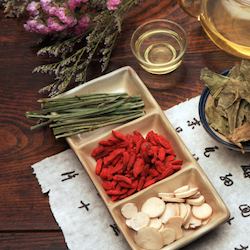 in fact, both can be combined together for better results. They can be quite complementary to each other for synergizing the therapeutic effects. With increasing public awareness of herbal medicine, it is the hope of the authors that complementary and alternative medicines can be added to mainstream schools of health sciences by developing a view of the human body that includes oriental concepts. In addition, a public health campaign can be launched to educate about the merits and hazards of indiscriminate use of herbs.
[button link=”http://www.hindawi.com/journals/ecam/2014/251891/” window=”yes”]LINK TO THE FULL TEXT HERE [/button]