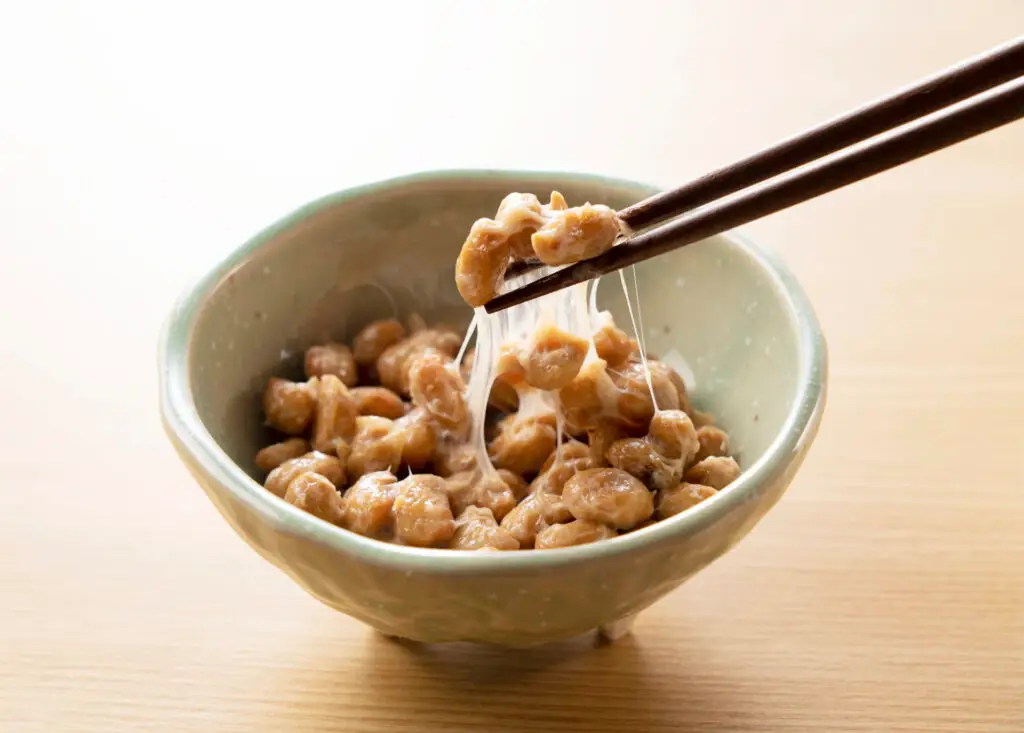
Nattokinase is a proteolytic enzyme derived from natto, a traditional Japanese food produced by fermenting soybeans with Bacillus subtilis var. natto. Since its identification in the 1980s, nattokinase has attracted clinical interest primarily because of its fibrinolytic activity and potential role in cardiovascular health.
Clinical studies, however, have produced inconsistent results. One possible explanation is dose. Many human trials have evaluated approximately 2,000 fibrinolytic units (FU) per day, while several studies reporting more substantial changes in lipid levels or carotid atherosclerosis have used considerably higher doses.
A 2022 study published in Frontiers in Cardiovascular Medicine provides an important addition to this discussion. Chen and colleagues retrospectively evaluated 1,062 adults taking nattokinase for 12 months. Most participants received 10,800 FU/day, making this the largest clinical study to date examining long-term use of nattokinase at this dose.¹
The investigators reported significant changes in serum lipids, carotid intima-media thickness and carotid plaque size. Equally interesting was the observation that a smaller group receiving 3,600 FU/day experienced comparatively little change.
Nattokinase and Cardiovascular Health
Although nattokinase is best known for its fibrinolytic activity, its potential cardiovascular effects may extend beyond fibrin degradation.
Human studies have demonstrated effects on several coagulation and fibrinolytic markers. In a double-blind, placebo-controlled crossover study, Kurosawa and colleagues found that a single 2,000-FU dose increased D-dimer and fibrin/fibrinogen degradation products, decreased factor VIII activity, increased antithrombin concentrations and prolonged activated partial thromboplastin time.²
Hsia and colleagues subsequently evaluated 4,000 FU/day for two months and reported reductions in fibrinogen, factor VII and factor VIII.³ These findings support the biological activity of orally administered nattokinase even at relatively modest doses.
Potential effects on platelet activity have also been investigated. In experimental research, Jang and colleagues demonstrated inhibition of collagen- and thrombin-induced platelet aggregation, reduced thromboxane B2 formation and delayed arterial thrombus formation.⁴ The platelet-specific evidence, however, remains largely preclinical.
Blood pressure has been evaluated in randomized clinical trials. Kim and colleagues studied adults with prehypertension or stage 1 hypertension and found that 2,000 FU/day for eight weeks produced placebo-adjusted reductions of approximately 5.6 mmHg in systolic and 2.8 mmHg in diastolic blood pressure.⁵ A subsequent North American randomized, double-blind, placebo-controlled trial also reported blood-pressure effects following eight weeks of nattokinase supplementation, along with changes in von Willebrand factor in a subgroup analysis.⁶
The evidence becomes less consistent when lipid metabolism and atherosclerosis are considered.Yang and colleagues conducted a six-month randomized, double-blind trial and found that nattokinase alone produced little meaningful effect on serum lipids, whereas the combination of nattokinase and red yeast rice produced significant improvements.⁷
A larger randomized trial by Hodis and colleagues evaluated 2,000 FU/day in 265 adults and found no significant effect on progression of subclinical atherosclerosis, as measured by carotid intima-media thickness and carotid arterial stiffness. The investigators also found no significant effects on blood pressure, serum lipids or several coagulation and fibrinolytic markers compared with placebo.⁸
Higher-dose studies have produced different results. In 2017, Ren and colleagues evaluated 6,000 FU/day in patients with carotid atherosclerosis. After 26 weeks, nattokinase was associated with significant reductions in carotid intima-media thickness and carotid plaque size. The investigators reported a 36.6% reduction in plaque size, along with reductions in total cholesterol, LDL-C and triglycerides and an increase in HDL-C.⁹
Taken together, these studies raise the possibility that the dose needed to influence fibrinolytic activity or blood pressure may differ from the dose needed to produce measurable changes in lipid metabolism or vascular structure.
The 1,062-Participant Study
Chen and colleagues retrospectively reviewed 2,875 patient records from hospitals and community health centers in China. After applying study criteria, 1,062 participants were included in the final analysis.¹ Participants ranged from 63 to 85 years of age, with an average age of 67.5 years. The cohort included 491 men and 571 women. Participants had marginal or mild hyperlipidemia and/or evidence indicating mild atherosclerosis, and 683 had evidence of carotid atherosclerosis.
All participants underwent blood lipid testing. Carotid ultrasound was performed before treatment and again after approximately 12 months in participants being evaluated for atherosclerosis.
The nattokinase tablets used in the study provided 3,600 FU per tablet. Most participants took one tablet three times daily, providing a total daily dose of 3,600 FU three times daily, or 10,800 FU/day. A much smaller group of 61 participants received 3,600 FU/day and served as a lower-dose comparison group.
Compliance was monitored weekly by healthcare staff. A subset of participants also received vitamin K2 at 180 μg/day, while another subgroup used aspirin at 100 mg/day.
Carotid Ultrasound and Laboratory Assessment
The study is notable because investigators assessed vascular structure in addition to conventional serum lipids. A Philips iE33 color Doppler ultrasound diagnostic instrument with a 7.5 MHz probe was used to examine the bilateral common carotid arteries. Two-dimensional ultrasound was used to evaluate the arterial wall, lumen and plaque and to measure common carotid artery intima-media thickness (CCA-IMT) and carotid plaque size.¹
Laboratory testing also included total cholesterol, triglycerides, LDL cholesterol and HDL cholesterol. Liver and kidney function were also evaluated.
This provided two different types of cardiovascular data: conventional circulating lipid markers and structural measurements of carotid atherosclerosis.
Effects on Serum Lipids
After 12 months of nattokinase at 10,800 FU/day, significant changes were reported across the lipid profile.¹Total cholesterol decreased 15.9%, triglycerides decreased 15.7%, and LDL-C decreased 18.1%. HDL-C increased 15.8%. The percentage of participants showing improvement was also high. Total cholesterol improved in 95.4% of participants, triglycerides in 85.2%, LDL-C in 84.3% and HDL-C in 89.1%.
These findings differ considerably from several earlier trials using lower nattokinase doses, particularly those evaluating approximately 2,000 FU/day.
→ Want to read more about lipid wellness? Visit our Lipid Health Resource Center for related articles and more.
Effects on Carotid Atherosclerosis
The carotid ultrasound findings were among the more notable observations. Among the 683 participants with evidence of carotid atherosclerosis, mean CCA-IMT decreased from 1.33 mm to 1.04 mm, a reduction of approximately 21.7%.¹ Mean carotid plaque size decreased from 24.9 mm² to 15.94 mm², representing a 36.0% reduction. Improvement in CCA-IMT was observed in 77.7% of participants, while 66.5% demonstrated improvement in carotid plaque size.
The magnitude of these changes warrants attention, but also caution. Because the study was retrospective and lacked a randomized placebo group, it cannot establish that nattokinase itself caused the observed changes in vascular structure.
Does Nattokinase Have a Dose-Response Effect?
The lower-dose comparison provides one of the more clinically interesting aspects of the study. Participants receiving 3,600 FU/day experienced substantially smaller changes after 12 months. Triglycerides decreased approximately 1%, total cholesterol decreased 3.8%, HDL-C increased 3.1%, while LDL-C increased 2.3%. CCA-IMT decreased 4.0% and carotid plaque size decreased 3.5%.¹ These findings contrast with the substantially larger changes reported with 10,800 FU/day.
Previous research provides additional context. A long-term randomized trial using 2,000 FU/day failed to demonstrate an effect on progression of subclinical atherosclerosis.⁸ The 2017 study using 6,000 FU/day, however, reported significant reductions in carotid IMT and plaque size.⁹ The current study found comparatively little effect at 3,600 FU/day but substantially greater changes at 10,800 FU/day.¹
These studies cannot be considered a formal dose-response analysis because the populations, study designs and treatment durations differed. Nevertheless, the pattern raises an important clinical question regarding nattokinase dosing.
Chen and colleagues proposed that the effective dose for hyperlipidemia and atherosclerosis may fall between 6,000 and 12,000 FU/day.¹ Prospective dose-ranging trials are needed before this range can be considered established.
Vitamin K2 and Aspirin
The investigators also examined participants who used vitamin K2 or aspirin in addition to nattokinase. Vitamin K2 was co-administered to 181 participants at a dose of 180 μg/day. This subgroup demonstrated greater improvement in several measured outcomes compared with nattokinase alone.¹ The mechanism underlying the observation remains uncertain, and participants were not randomized to vitamin K2.
A subgroup of 96 participants used aspirin at 100 mg/day. The investigators also reported favorable associations in this group. These observations should not be interpreted as evidence supporting routine combination therapy. In particular, combining nattokinase with aspirin, anticoagulants or other antiplatelet medications requires careful consideration because of the potential for additive effects on hemostasis. At the same time it is reassuring due to the theoretical interactions between a blood thinner and nattokinase did not become actualize.
Safety and Practitioner Considerations
No noticeable adverse effects associated with nattokinase were reported during the 12-month study period.¹ Liver and kidney function were included in the laboratory evaluation. The findings are reassuring given the relatively high dose and duration of supplementation, but due to limitations of the study, they do not establish that 10,800 FU/day is appropriate for all patients.
Nattokinase has biologically meaningful fibrinolytic activity. Medication use, bleeding history, coagulation disorders and planned surgical or dental procedures should be considered before supplementation. Until future research says otherwise, additional caution is appropriate when nattokinase is used alongside anticoagulant or antiplatelet medications.
Product potency is another important consideration. Nattokinase should be evaluated according to measured enzymatic activity expressed in fibrinolytic units rather than milligram weight alone. A stated milligram quantity does not necessarily establish fibrinolytic potency. Products that provide post-production certificates of potency offer an additional level of validation, giving practitioners greater confidence that the labeled enzymatic activity is present in the finished product.
Because nattokinase is derived from natto—a fermented soybean food naturally rich in vitamin K2 (menaquinone-7)—some nattokinase preparations may retain measurable amounts of vitamin K2 depending on their manufacturing and purification process.6˒10 This should be considered when vitamin K intake is clinically relevant, particularly in patients using vitamin K–antagonist anticoagulants or when supplemental vitamin K is being used concurrently. Vitamin K2–free nattokinase is also commercially available; specialized manufacturing processes can remove vitamin K2 while retaining nattokinase activity.11˒6
These studies raise the possibility that the dose needed to influence fibrinolytic activity or blood pressure may differ from the dose needed to produce measurable changes in lipid metabolism or vascular structure.
The available research also suggests that dosing may need to be considered according to the intended clinical objective. Lower doses have demonstrated effects on fibrinolytic markers and blood pressure,²˒⁵˒⁶ while evidence for effects on serum lipids and structural measures of atherosclerosis has been more apparent in studies using higher doses.¹˒⁹
Study Limitations
The Chen study has several important limitations. First of all, it was retrospective rather than randomized and placebo controlled. Lifestyle information was partly self-reported, and participants were not randomly assigned to nattokinase dose, vitamin K2 or aspirin.¹
Secondly, the difference in group size is also substantial. Approximately 1,000 participants received 10,800 FU/day, while only 61 received 3,600 FU/day. The lower-dose group therefore cannot be considered equivalent to a randomized dose-comparison arm.
Additionally, the magnitude of the reported reductions in CCA-IMT and carotid plaque were not independent replication in prospective randomized trials.
Finally, it is important to recognizer that several authors were employees of the company that manufactured the nattokinase used in the study, an additional consideration when interpreting the findings.¹
Clinical Perspective
Nattokinase is most commonly known by clinicians as a systemic fibrinolytic enzyme, but the available clinical literature suggests additional cardiovascular effects and properties at higher than traditionally recommended doses.
At 2,000 FU/day, clinical studies have demonstrated effects on fibrinolytic activity and blood pressure, but a large randomized trial did not demonstrate an effect on progression of subclinical atherosclerosis.2˒5˒6˒8 At 6,000 FU/day, significant improvements in carotid plaque and lipid measurements have been reported.⁹
In the study by Chen and colleagues, 10,800 FU/day for 12 months was associated with significant improvements in total cholesterol, triglycerides, LDL-C, HDL-C, carotid intima-media thickness and carotid plaque size.¹ In contrast, participants receiving 3,600 FU/day demonstrated comparatively little change.
The study does not establish 10,800 FU/day as an optimal nattokinase dose, but it does suggest there is a dose-dependent effect to nattokinase that has not been fully explored in research. Nor does it prove that nattokinase reverses atherosclerosis, although the It does, however, raise a legitimate question about whether lower doses used in previous research—and commonly used in clinical practice—are sufficient when the intended outcome extends beyond just fibrinolytic activity.
Future randomized, placebo-controlled dose-ranging studies will be important for defining the minimum effective dose for specific cardiovascular endpoints, determining long-term safety and identifying which patient populations are most likely to benefit.
References
- Chen H, Chen J, Zhang F, et al. Effective management of atherosclerosis progress and hyperlipidemia with nattokinase: A clinical study with 1,062 participants. Front Cardiovasc Med. 2022;9:964977. doi:10.3389/fcvm.2022.964977.
- Kurosawa Y, Nirengi S, Homma T, et al. A single-dose of oral nattokinase potentiates thrombolysis and anti-coagulation profiles. Sci Rep. 2015;5:11601. doi:10.1038/srep11601.
- Hsia CH, Shen MC, Lin JS, et al. Nattokinase decreases plasma levels of fibrinogen, factor VII, and factor VIII in human subjects. Nutr Res. 2009;29(3):190–196. doi:10.1016/j.nutres.2009.01.009.
- Jang JY, Kim TS, Cai J, et al. Nattokinase improves blood flow by inhibiting platelet aggregation and thrombus formation. Lab Anim Res. 2013;29(4):221–225. doi:10.5625/lar.2013.29.4.221.
- Kim JY, Gum SN, Paik JK, et al. Effects of nattokinase on blood pressure: a randomized, controlled trial. Hypertens Res. 2008;31(8):1583–1588. doi:10.1291/hypres.31.1583.
- Jensen GS, Lenninger M, Ero MP, Benson KF. Consumption of nattokinase is associated with reduced blood pressure and von Willebrand factor, a cardiovascular risk marker: results from a randomized, double-blind, placebo-controlled, multicenter North American clinical trial. Integr Blood Press Control. 2016;9:95–104. doi:10.2147/IBPC.S99553.
- Yang NC, Chou CW, Chen CY, Hwang KL, Yang YC. Combined nattokinase with red yeast rice but not nattokinase alone has potent effects on blood lipids in human subjects with hyperlipidemia. Asia Pac J Clin Nutr. 2009;18(3):310–317.
- Hodis HN, Mack WJ, Meiselman HJ, et al. Nattokinase atherothrombotic prevention study: a randomized controlled trial. Clin Hemorheol Microcirc. 2021;78(4):339–353. doi:10.3233/CH-211147.
- Ren N, Chen H, Li Y, McGowan GW, Lin Y. A clinical study on the effect of nattokinase on carotid artery atherosclerosis and hyperlipidaemia. Zhonghua Yi Xue Za Zhi. 2017;97(26):2038–2042. doi:10.3760/cma.j.issn.0376-2491.2017.26.005.
- Tsukamoto Y, Ichise H, Kakuda H, Yamaguchi M. Intake of fermented soybean (natto) increases circulating vitamin K2 (menaquinone-7) and gamma-carboxylated osteocalcin concentration in normal individuals. J Bone Miner Metab. 2000;18(4):216–222.
- EFSA Panel on Dietetic Products, Nutrition and Allergies. Safety of fermented soybean extract NSK-SD® as a novel food pursuant to Regulation (EC) No 258/97. EFSA J. 2016;14(7):4541.