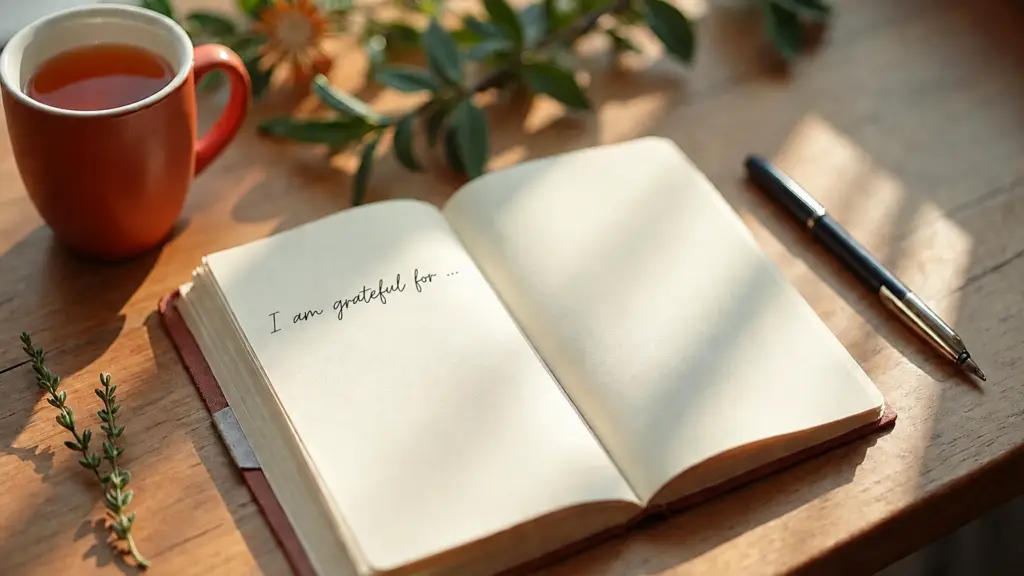
What are you grateful for? This question inevitably gets asked at Thanksgiving tables across the country. You may even tell patients to focus on their blessings and avoid dwelling on the negative—habits shown in published studies to improve health in multiple ways.
But as a busy practitioner juggling patients, family, and other responsibilities, gratitude may be the last thing on your mind right now. This is especially true when you are under a lot of stress, going through a difficult time, or experiencing burnout. You may strive to live in gratitude but it ends up coming out forced or insincere.
But real gratitude isn’t about pretending. It doesn’t ask you to hide how hard things are. It simply offers a little room to breathe inside the hard days, so they don’t swallow you whole.
Why Gratitude Actually Helps
When you set the platitudes aside, gratitude is a simple habit of the mind: widening your view just enough to take in what’s also true. You don’t have to ignore the difficult parts. You’re just making space for the good ones to stand beside them.
As you probably know, people who practice gratitude often report sleeping better, feeling less anxious or low, and carrying stress more lightly. Studies also suggest that a more hopeful outlook is tied to healthier habits and a healthier heart. Even small, regular moments of noticing what’s going well may help your body settle after long stretches of tension.1,2,3
That’s not magic—it’s what happens when you gently teach your mind to notice steadiness and support, even in small doses.
Practicing Gratitude in the Real World
If forced positivity makes you cringe, you’re not alone. The good news is that this practice works best when it’s honest. Here are three ways to begin.
1. Start with the people closest to you.
Big, abstract gratitude can feel hollow. So start close to home. Think of the coworker who caught something you missed, the teammate who stepped in when things got tense, or the people who kept the day from falling apart. This isn’t about being polite. It’s about remembering that you were never meant to carry everything alone, and that you don’t.
2. Let the hard and the good sit side by side.
You can be frustrated and thankful in the same breath. You can be worn out and still be moved by one kind moment with someone you helped. You don’t have to edit out the difficult parts to make room for the good. Try saying, “Today was exhausting, and this one thing was lovely.” That’s more honest than calling the day “good,” and it’s easier to keep up.
3. Get specific.
“I’m grateful for my job” is nice, but it often slips right past us. Smaller, more precise thoughts tend to land: “I’m so glad Sarah took that phone call,” or “I’m grateful I had five extra minutes to really talk with a patient today.” Details make gratitude feel real. It stops being a chore and becomes a quiet way of noticing your own life.
Why This Matters for You
This practice won’t change the pressure of your work. Some things need bigger changes than any one person can make. What it can change is how you carry it.
When you’re always on alert, watching for what might go wrong, your mind and body get tired in a way that sleep doesn’t always fix. Gratitude is a gentle counterweight. It reminds you that alongside everything that needs your attention, there is something good right here: a connection, a task finished, a person beside you.
Your work will probably always be demanding. There will be heavy days and heavy responsibilities. Gratitude can’t take those away, but it can help you meet them with a clearer head and a softer, steadier heart, so you can keep showing up without losing yourself along the way.
References
- Chen Y, Okereke OI, Kim ES, Tiemeier H, Kubzansky LD, VanderWeele TJ. Gratitude and Mortality Among Older US Female Nurses. JAMA Psychiatry. 2024 Oct 1;81(10):1030-1038. doi: 10.1001/jamapsychiatry.2024.1687. PMID: 38959002; PMCID: PMC11223047.
- Sirois FM, Hirsch JK, Wood AM. Gratitude and health behaviours: A temporal affective self-regulation resource analysis across 24 samples. Br J Health Psychol. 2026 Sep;31(3):e70103. doi: 10.1111/bjhp.70103. PMID: 42617657; PMCID: PMC13489693.
- Diniz G, Korkes L, Tristão LS, Pelegrini R, Bellodi PL, Bernardo WM. The effects of gratitude interventions: a systematic review and meta-analysis. Einstein (Sao Paulo). 2023 Aug 11;21:eRW0371. doi: 10.31744/einstein_journal/2023RW0371. PMID: 37585888; PMCID: PMC10393216.