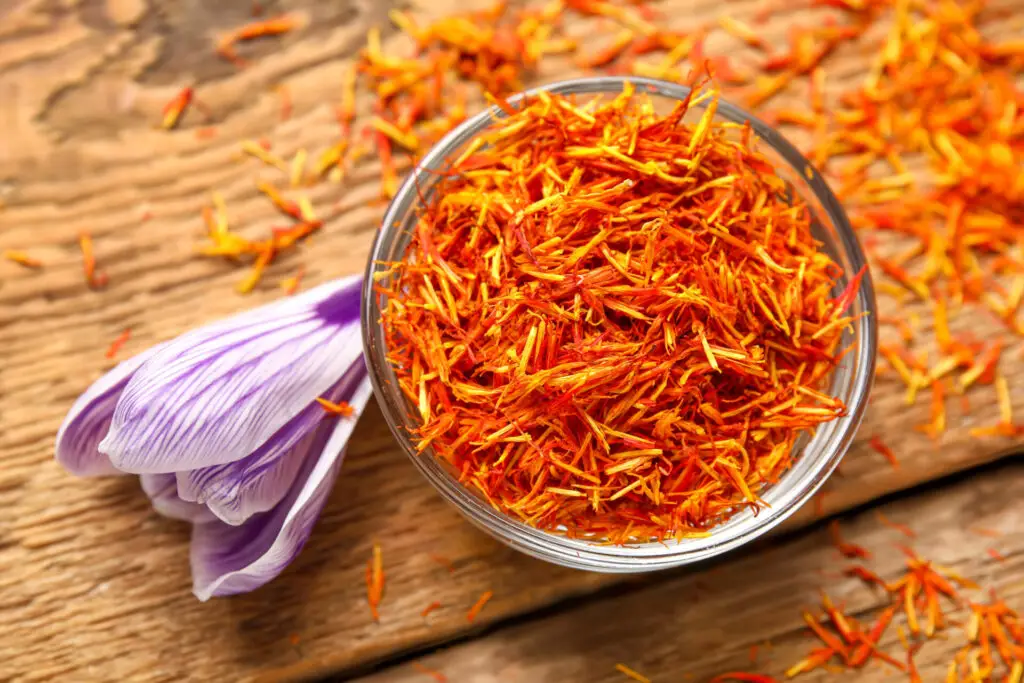
For centuries, saffron (Crocus sativus L.) has been prized in kitchens worldwide as the most exotic and expensive spice by weight. But saffron is rapidly shedding its culinary-only reputation. More than ever, the research landscape of saffron has shifted from “promising spice” to a sophisticated, evidence-based botanical ally for mental health, particularly when it comes to mood, sleep, stress, and overall emotional well-being.
The 2026 Research Surge
A comprehensive review published in Phytochemistry Reviews (Lai et al., 2026) provides a deeper look into the mechanics behind saffron’s success. Researchers aren’t just seeing clinical outcomes; they are now understanding how it works.
The research highlights a multi-modal approach: saffron modulates neurotransmitter pathways, influences the gut-brain axis, and offers neuroprotective benefits that may be crucial for patients dealing with the complexities of major depressive disorder. For your patients who are wary of the side-effect profiles of traditional pharmaceuticals, these findings offer a compelling, mechanism-backed alternative or adjunct therapy.
The Study: Saffron Helps Women 50–70
Perhaps the most exciting development comes from a new study published in Frontiers in Nutrition, authored by Adrian Lopresti and colleagues. This study focused on a demographic often seeking integrative solutions for healthcare issues: women aged 50 to 70 experiencing low mood and poor sleep.
The researchers tested a standardized saffron extract over a 12-week period. The results were not just statistically significant—they were clinically meaningful. A clinically meaningful improvement in depressive symptoms (defined as a reduction of 7 points or more on the depression scale) was achieved by 48.8% of participants taking the saffron extract, compared to only 25.6% in the control group.
Beyond mood, the study noted improvements in self-esteem and sleep-related impairment, suggesting that saffron acts as a holistic support rather than a Band-Aid for a single symptom.
Listen to Gaetano Morello, ND, share his clinical experience with saffron for stress, anxiety, and depression, along with his other recommendations for mood, optimal gut-brain axis function, and mental health, on our One Medicine Podcast: Natural Solutions for Depression, Stress, and Anxiety.

Three Benefits Specific to Saffron
With consistency in clinical trials, a clearer understanding of how to implement saffron effectively is emerging.
- Safety and Tolerability: Unlike many conventional antidepressants, which often carry burdens of weight gain, sexual dysfunction, or insomnia, the research continues to support saffron’s favorable safety profile.
- Addressing the “Cluster” of Symptoms: One of the most common complaints in the clinic is the triad of low mood, poor sleep, and fatigue. Saffron appears to uniquely address this cluster. The 2026 reports in NutraIngredients emphasized that beyond just lifting the mood, patients are reporting better sleep quality, which is frequently the missing link in recovery.
- Adjunctive Potential: The beauty of saffron is its potential to be used as an adjunct to existing therapies. For patients who are currently on SSRIs or other medications but haven’t reached full remission of symptoms, saffron may offer that extra layer of support needed to improve overall quality of life.
While the story of saffron is evolving and more research is needed, we do have the molecular understanding and the promising clinical data to say this golden spice is a legitimate intervention for those struggling with mood and sleep disorders. By leveraging these new findings, you can offer a more nuanced, evidence-based approach to mental health that aligns with holistic values.
References
→ Click the links below to download the Full Text.
Lopresti AL, Smith SJ. The effects of a saffron extract (Affron®) on mood, sleep, self-esteem, and exploratory measures of physical appearance in women aged 50 to 70 years experiencing low mood and poor sleep: a randomized, double-blind, placebo-controlled trial. Front Nutr. 2026 Jun 17;13:1838513. doi: 10.3389/fnut.2026.1838513. PMID: 42389708; PMCID: PMC13318664. Full Text Link
Lai, Z., Cao, Y., Zhang, Y. et al. The antidepressant potential of saffron (Crocus sativus L.): molecular mechanisms, neurotransmitter modulation, gut-brain axis interactions, and clinical efficacy in major depressive disorder. Phytochem Rev 25, 273–304 (2026). https://doi.org/10.1007/s11101-025-10125-6 Full Text Link
Examine.com research feed: Saffron continues to show antidepressant effects.
NutraIngredients (2026). Exploring saffron’s potential for mood and sleep disorders.