
Glycemic control is important for everyone, especially those at risk for or living with diabetes. Non-pharmacologic approaches to glucose regulation can serve as valuable adjuncts to comprehensive diabetes prevention and management strategies. Postprandial glucose responses are influenced by several physiological factors, including meal composition, gastric emptying, intestinal glucose absorption, and incretin secretion.
Dietary strategies that slow gastric emptying and enhance glucagon-like peptide-1 (GLP-1) secretion, such as increasing fiber and vegetable intake, have been studied for their potential to improve glycemic control. Additionally, several studies have demonstrated the benefits of consuming carbohydrates last within a meal (carbohydrate-last meal sequencing) in reducing postprandial glucose levels among individuals with type 2 diabetes, prediabetes, and healthy adults.
The Study
A 4-arm randomized crossover trial recently published in Diabetes, Obesity and Metabolism studied 33 healthy Korean women and the glycemic impact of meal sequencing. All participants had normal fasting blood glucose levels and did not have diabetes or prediabetes. Researchers also evaluated whether eating speed impacted postprandial glucose levels. Participants were randomly assigned to one of four meal sequences:
- VPC (vegetables→protein→carbohydrate) limited to 35 min
- CPV (carbohydrate→protein→vegetables) limited to 35 min
- TGR (all together, no sequence) limited to 35 min
- NTL (no time limit, no sequence)
Each test meal contained approximately 573 calories, and macronutrient composition was standardized across all four sequences. All meals were served after an overnight fast of at least 10 hours. A 4-day washout period separated the 3-day meal sequences, and all participants completed all four interventions.
Each participant wore a continuous glucose monitor using the FreeStyle Libre 2 System. CGM assessed glucose responses over three hours following meals.
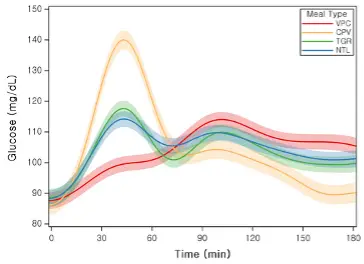
The vegetable-first meal was associated with a flatter postprandial glucose increase as compared to the other 3 meal sequences. The carbohydrate-first meal sequence had the highest acute glucose spike, followed by TGR, and NTL meals.
The most notable finding is that the vegetable-first meal produced approximately 74% lower glucose area under the curve (iAUC) than carbohydrate-first eating during the first hour.
Another measurement, mean amplitude of glycemic excursions (MAGE), assesses glycemic variability. In this study, MAGE was approximately 54% lower with vegetable-first eating compared with carbohydrate-first eating. This is noteworthy because glycemic variability is recognized as an independent contributor to oxidative stress, endothelial dysfunction, and cardiometabolic risk.
The TGR and NTL meal sequences were similar enough that the authors concluded that eating speed does not result in major differences in postprandial glucose levels.
There was a progressive reduction in post-meal glucose responses over the three-day intervention, suggesting that repeated use of the vegetable-first meal sequence may promote early metabolic adaptations. This highlights the potential value of incorporating this meal-ordering strategy into long-term dietary habits, although longer-term studies are needed to determine whether it reduces the risk of developing diabetes.
Conclusions
This study supports previous research demonstrating that consuming vegetables first, or a carbohydrate-last meal sequence, can reduce postprandial glucose spikes. Meal order matters independently of macronutrient composition. Meal sequencing may be a relatively simple, low-cost dietary intervention to improve postprandial glycemic control without requiring carbohydrate restriction or calorie reduction.
→ Download the Full Text here.