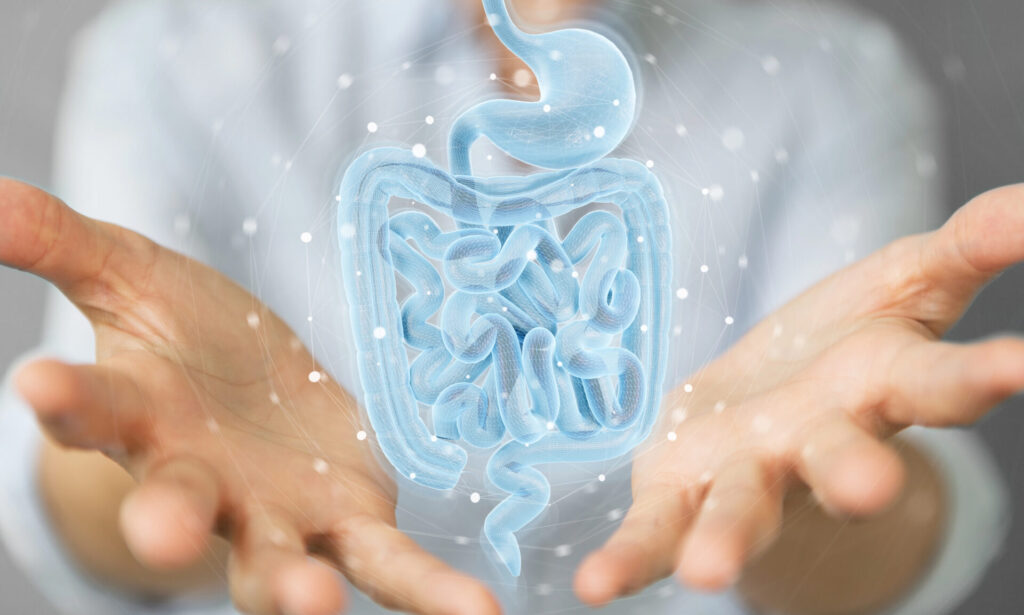
Gastrointestinal (GI) issues are common in Parkinson’s disease (PD) patients. They develop as part of the disease itself, but GI issues may also contribute to PD development and progression. Learn how to optimize gut health in PD patients to improve disease outcomes and quality of life.
The contribution of gut health should not be underestimated or ignored in Parkinson’s patients. PD affects the nerves of the GI tract, impairing motility, and symptoms range from delayed gastric emptying, gastroparesis, dysphagia, gastroesophageal reflux disease (GERD), and constipation.1-3 GI dysfunction can precede the onset of motor symptoms by several years, with constipation presenting up to 2 decades before.4 PD is associated with irritable bowel syndrome (IBS), inflammatory bowel disease (IBD), and diverticular disease.5 Many drugs used to treat Parkinson’s can cause GI dysfunction.6 GI dysfunction can also impair PD medication absorption, worsening motor impairment.2,7
The Gut-Brain Axis Is Altered in Parkinson’s Disease
The vagus nerve is the main communication highway between the GI tract and the central nervous system (CNS). α-synuclein is a synaptic protein that regulates neuronal functions and is misfolded in PD, forming clumps known as Lewy bodies.1,8 It is hypothesized that the intestines are the site of origin of pathological α-synuclein, with accumulation in colonic tissue of patients with early- or prodromal-stage PD.9 One theory of PD development proposed by pathologist Heiko Braak, is that Lewy pathology starts in peripheral nerves, such as in the enteric nervous system (ENS), and spreads to the CNS via the vagus nerve in a prion-like spread.1,8,10 Although this theory is debated, it may represent one of many mechanisms in the development of this complex disease.11
This effect has been observed in healthy rats, where α-synuclein injected into the gut was transported along the vagus nerve to the brain.1,8 Human GI biopsies obtained for screening or diagnostic purposes showed α-synuclein deposits years before the first reported symptom of PD.11 In a Swedish cohort, truncal vagotomy was associated with a 50% reduction in PD risk, further supporting the hypothesis that a dysfunctional gut-brain axis may be a root cause of PD.1,8 Similar to the prion-like spread in the gut, pathology may also begin in the olfactory mucosa, spreading to the brain.7
Dysbiosis and the Probiotic That Might Make Things Worse
A systematic review and meta-analysis analyzed 14 studies with 1045 PD cases and 821 healthy controls and found that altered gut microbiome patterns may be associated with PD.12 It is unclear if dysbiosis precedes and causes PD pathology or is a consequence of the condition—it’s likely both.7
Animal studies have shown that changes in the gut microbiota precede motor dysfunction.5 A study on a Parkinson’s mouse model showed that the absence of microorganisms in the intestines prevented the aggregation of α-synuclein, pointing to the gut microbiome as playing a role in PD development.9
The gut microbiota influences gut and brain function by producing neurotransmitters, metabolites, and hormones. The microbiome is partially responsible for pesticide detoxification, a known risk factor for PD. Dysbiotic microbiota trigger local inflammation and intestinal permeability, exposing the intestinal nerve plexus to toxins, favoring the abnormal aggregation of α-synuclein.1
Microbial imbalances result in reduced anti-inflammatory short-chain fatty acid production and increased inflammatory lipopolysaccharide (LPS) production.4 Toxins, proinflammatory cytokines, immune cells, and antigens can also enter systemic circulation and travel to the brain, where they activate microglia and drive neuroinflammation.1
Akkermansia muciniphila is a resident of the microbiome associated with health benefits, which has led to its development as a probiotic. However, in PD populations, it’s unclear whether unusually increased amounts are a cause or consequence of symptoms.1 Akkermansia degrades the mucus layer using the mucus for energy; excess erosion of the intestinal barrier can lead to increased permeability.13 Therefore, Akkermansia probiotics should be used with caution in this patient population.14
SIBO and Parkinson’s
A systematic review and meta-analysis of eleven studies with 973 participants found a 47% prevalence of small intestinal bacterial overgrowth (SIBO) in patients with PD.6
SIBO is characterized by increased bacterial density and/or abnormal types of bacteria in the small intestine and is diagnosed by upper endoscopy or breath testing. Symptoms typically occur minutes to hours after meals and include bloating, belching, flatulence, abdominal pain, diarrhea, and/or constipation. Severe SIBO can cause macronutrient and vitamin malabsorption, leading to weight loss. Nutritional imbalances caused by SIBO may promote neuronal injury.7 SIBO can result in mucosal injury and inflammation, impairing drug absorption, and certain bacteria can even partially metabolize levodopa, decreasing its efficacy.15
SIBO may be both a cause and a consequence of Parkinson’s. By promoting intestinal inflammation and increasing gut permeability, SIBO allows endotoxins such as lipopolysaccharides (LPS) to enter the circulation, potentially increasing α-synuclein expression and contributing to the neurodegenerative cascade associated with PD.6,7
At the same time, impaired GI motility, a hallmark of PD due to enteric nervous system dysfunction, is a major risk factor for SIBO.1 This creates a self-perpetuating cycle in which PD-related dysmotility promotes SIBO, while SIBO may further drive disease progression.
Acid reflux is also common in PD and is often treated with proton pump inhibitors (PPIs) or H₂ receptor blockers. Hypochlorhydria is a risk factor for both SIBO and Helicobacter pylori, further increasing susceptibility to bacterial overgrowth.1
Akkermansia muciniphila is a resident of the microbiome associated with health benefits, which has led to its development as a probiotic. However, in PD populations, it’s unclear whether unusually increased amounts are a cause or consequence of symptoms.
Treating SIBO Improves Parkinson’s Symptoms
A study on 33 PD patients and 30 healthy controls assessed SIBO and H. pylori infection prevalence and treatment effects. Three breath tests were administered, including glucose and lactulose for SIBO and urea for H. pylori. Patients with SIBO were treated with 400 mg rifaximin TID for 7 days and reevaluated 1 and 6 months later. Participants also received an ultrasound to evaluate gastric emptying.15
SIBO prevalence was significantly higher in patients (54.5%) compared to controls (20.0%). H. pylori prevalence did not differ significantly between the two groups, with prevalence rates of 33.3% among patients and 26.7% among controls.15
Among PD patients, those with SIBO and/or H. pylori had more unpredictable motor fluctuations. SIBO treatment resulted in significantly improved motor fluctuations without interfering with levodopa efficacy. There were no side effects related to treatment. 77.8% of SIBO patients were SIBO-free at 1 month after treatment. At 6 months following treatment, the relapse rate was 43%. Abnormalities of GI motility, as shown with delayed gastric emptying in the PD group, may favor the occurrence and relapse of SIBO.15
Only 3 patients were infected with H. pylori and not SIBO, whereas 8 patients had both, and 10 patients only had SIBO. Acid hyposecretion that occurs with H. pylori may predispose patients to SIBO.15 The higher prevalence of both conditions occurring together highlights the need for comprehensive testing in this population.
The researchers chose to hold H. pylori treatment until the end of 6 months to control for the effects of SIBO treatment. Details about breath gas prevalence (i.e., hydrogen, methane, hydrogen sulfide) were not included.15 It is well known that each breath gas warrants different treatments for efficacy, and this study only used rifaximin. Additionally, rifaximin is typically prescribed for 2 weeks in many studies versus 1 week in this study.
SIBO is commonly a relapsing condition even in healthy populations, requiring preventive therapies such as prokinetics. This study did not include preventive therapies, which should be emphasized in this patient population, considering the intestinal dysmotility associated with PD.
Another study used rifaximin in PD patients, but did not necessarily diagnose SIBO. The rationale was that gut microbiome modulation with this particular antibiotic may benefit those with PD. The researchers first tested rifaximin in a mouse PD model and found improved intestinal epithelial integrity, reduced systemic and neuroinflammation, and improved motor and cognitive function. Twenty PD patients were given 1,100 mg rifaximin daily for 7 days. Patients with higher baseline inflammation had a reduction in systemic inflammation as assessed by blood cytokine levels.9
H. pylori and Parkinson’s
In 1960, the association between H. pylori infection and PD was discovered.16 Meta-analyses suggest that the prevalence of H. pylori infection is higher in PD patients than in healthy controls.17,18 Many proposed mechanisms may explain how H. pylori contributes to PD development and progression, including inflammation and bacterial toxins that lead to a “leaky” blood-brain barrier, stimulating microglia activation.19
In a small double-blind RCT, H. pylori eradication led to significant improvement in levodopa bioavailability in PD patients. Researchers noted decreased gastritis/duodenitis and motor improvement in those treated for H. pylori.20 Impaired acid secretion, damaged mucosa, and H. pylori uptake of levodopa affect drug absorption.16,21
Several other larger studies have shown significantly lower UPDRS-III (Unified Parkinson’s Disease Rating Scale) scores in non-infected PD patients and in patients after H. pylori treatment. This indicates that H. pylori infection may contribute to disease severity and motor impairment, and that treatment improves clinical outcomes.1.18,22
→ Visit our comprehensive Microbiome Resource Center for our library of articles on microbiome health, gut-brain axis, and other gut-related conditions — all in one spot.
Treatments to Optimize Gut Health in Parkinson’s
Since PD is a progressive disease, optimizing gut health will need to be ongoing.
- Treat infections and overgrowth: As discussed above, treating infections and focusing on relapse prevention may improve clinical outcomes.
- Probiotics: Meta-analyses showed that regular probiotic intake, including various Lactobacillus, Bifidobacterium, and other species over 4 weeks or longer, can significantly improve constipation in PD patients. Studies were mixed on whether probiotics improved motor function.23,24
- Fecal microbiota transplant (FMT): A case report series showed improved motor and non-motor symptoms, including constipation, even 6 months following FMT administered via colonoscopy.25,26 Randomized trials using orally administered FMT showed improvements in constipation.27,28 A meta-analysis including 145 patients across 3 RCTs showed no evidence of superiority compared to placebo, which may be attributed to different FMT protocols.29
- Motility agents: Prokinetic agents stimulate the migrating motor complex, improving motility. Prucalopride, a selective 5-HT4 receptor agonist, was studied in constipated PD patients who received either prucalopride (2 mg) or placebo once daily for 8 weeks. Procalopride was more effective than placebo in increasing bowel movement frequency.30 Although not specifically studied in PD, there are several nutraceutical considerations for restoring motility. Iberogast®, an herbal product used to address constipation, was not effective in PD patients.31
- Dietary changes: A healthy diet characterized by low sugar and high fiber, and thus a microbiome-supportive diet, has been associated with a lower risk of PD and prodromal symptoms.32 PD patients who adhered to the MIND diet (Mediterranean-DASH diet intervention for neurodegenerative delay) had lower serum zonulin levels, a marker of intestinal permeability.33 A naturopathic case study showed resolution of constipation and improvement in GERD in a PD patient with 5-7 servings of fruit and vegetables, decreased sugar, 30 g of fibrous foods, and 64 oz of water daily. The patient also took probiotics, 900 mg magnesium citrate, deglycyrrhizinated licorice (DGL), and apple cider vinegar.34
- Acupuncture: Several meta-analyses have shown that acupuncture is effective in treating motor and non-motor symptoms in PD, including constipation, neuropsychiatric symptoms, and dysphagia. Acupuncture may affect the gut-brain axis by promoting microbiota balance, interfering with α-synuclein expression, protecting neurological function, and reducing inflammation.35 A study on non-invasive transcutaneous auricular vagus nerve stimulation (taVNS), a device that delivers an electrical current to the outer ear’s acupuncture points, showed improvements in PD patients’ motor symptoms, quality of life, and sleep.36
Key Takeaways
- Gut dysbiosis, chronic GI inflammation, infections, motility disruptions, and intestinal permeability are modifiable factors that are altered in PD.
- Stool analysis, breath testing, and other testing methods providing a comprehensive assessment of the gut may help identify contributing factors to PD.
References:
- Gabrielli M, Zileri Dal Verme L, Zocco MA, Nista EC, Ojetti V, Gasbarrini A. The Role of the Gastrointestinal Microbiota in Parkinson’s Disease. Biomolecules. Dec 28 2024;15(1)doi:10.3390/biom15010026
- Ivan IF, Irincu VL, Diaconu Ș, Falup-Pecurariu O, Ciopleiaș B, Falup-Pecurariu C. Gastro-intestinal dysfunctions in Parkinson’s disease (Review). Experimental and Therapeutic Medicine. Oct 2021;22(4):1083. doi:10.3892/etm.2021.10517
- Maeda T, Nagata K, Satoh Y, Yamazaki T, Takano D. High prevalence of gastroesophageal reflux disease in Parkinson’s disease: a questionnaire-based study. Parkinsons Dis. 2013;2013:742128. doi:10.1155/2013/742128
- Hajare S, Kulkarni YA. Parkinson’s disease and the gut-brain connection: unveiling pathways, mechanisms and promising therapies. Brain Research. Dec 1 2025;1868:149975. doi:10.1016/j.brainres.2025.149975
- Park SJ, Özdinç BE, Coker KG, et al. Metagenomics indicates an interplay of the microbiome and functional pathways in Parkinson’s disease. NPJ Parkinsons Dis. Jan 30 2026;12(1)doi:10.1038/s41531-026-01271-5
- Li X, Feng X, Jiang Z, Jiang Z. Association of small intestinal bacterial overgrowth with Parkinson’s disease: a systematic review and meta-analysis. Gut Pathogens. Apr 16 2021;13(1):25. doi:10.1186/s13099-021-00420-w
- Dănău A, Dumitrescu L, Lefter A, Tulbă D, Popescu BO. Small Intestinal Bacterial Overgrowth as Potential Therapeutic Target in Parkinson’s Disease. International Journal of Molecular Sciences. Oct 28 2021;22(21)doi:10.3390/ijms222111663
- Liu B, Fang F, Pedersen NL, et al. Vagotomy and Parkinson disease: A Swedish register-based matched-cohort study. Neurology. May 23 2017;88(21):1996–2002. doi:10.1212/wnl.0000000000003961
- Hong CT, Chan L, Chen KY, et al. Rifaximin Modifies Gut Microbiota and Attenuates Inflammation in Parkinson’s Disease: Preclinical and Clinical Studies. Cells. Nov 2 2022;11(21)doi:10.3390/cells11213468
- Omotosho AO, Tajudeen YA, Oladipo HJ, et al. Parkinson’s disease: Are gut microbes involved? Brain Behav. Aug 2023;13(8):e3130. doi:10.1002/brb3.3130
- Lionnet A, Leclair-Visonneau L, Neunlist M, et al. Does Parkinson’s disease start in the gut? Acta Neuropathol. Jan 2018;135(1):1–12. doi:10.1007/s00401-017-1777-8
- Bai F, You L, Lei H, Li X. Association between increased and decreased gut microbiota abundance and Parkinson’s disease: A systematic review and subgroup meta-analysis. Experimental Gerontology. 2024;191:112444.
- Huang Y, Liao J, Liu X, Zhong Y, Cai X, Long L. Review: The Role of Intestinal Dysbiosis in Parkinson’s Disease. Frontiers in Cellular and Infection Microbiology. 2021;11:615075. doi:10.3389/fcimb.2021.615075
- Chiantera V, Laganà AS, Basciani S, Nordio M, Bizzarri M. A Critical Perspective on the Supplementation of Akkermansia muciniphila: Benefits and Harms. Life (Basel, Switzerland). May 24 2023;13(6)doi:10.3390/life13061247
- Fasano A, Bove F, Gabrielli M, et al. The role of small intestinal bacterial overgrowth in Parkinson’s disease. Mov Disord. Aug 2013;28(9):1241–9. doi:10.1002/mds.25522
- Wei BR, Zhao YJ, Cheng YF, Huang C, Zhang F. Helicobacter pylori infection and Parkinson’s Disease: etiology, pathogenesis and levodopa bioavailability. Immun Ageing. Jan 2 2024;21(1):1. doi:10.1186/s12979-023-00404-1
- Shen X, Yang H, Wu Y, Zhang D, Jiang H. Meta-analysis: Association of Helicobacter pylori infection with Parkinson’s diseases. Helicobacter. Oct 2017;22(5)doi:10.1111/hel.12398
- Dardiotis E, Tsouris Z, Mentis AA, et al. H. pylori and Parkinson’s disease: Meta-analyses including clinical severity. Clinical Neurology and Neurosurgery. Dec 2018;175:16–24. doi:10.1016/j.clineuro.2018.09.039
- McGee DJ, Lu X-H, Disbrow EA. Stomaching the possibility of a pathogenic role for Helicobacter pylori in Parkinson’s disease. Journal of Parkinson’s Disease. 2018;8(3):367–374.
- Pierantozzi M, Pietroiusti A, Brusa L, et al. Helicobacter pylori eradication and l-dopa absorption in patients with PD and motor fluctuations. Neurology. Jun 27 2006;66(12):1824–9. doi:10.1212/01.wnl.0000221672.01272.ba
- Lahner E, Annibale B, Delle Fave G. Systematic review: Helicobacter pylori infection and impaired drug absorption. Alimentary Pharmacology & Therapeutics. Feb 15 2009;29(4):379–86. doi:10.1111/j.1365-2036.2008.03906.x
- Lolekha P, Sriphanom T, Vilaichone RK. Helicobacter pylori eradication improves motor fluctuations in advanced Parkinson’s disease patients: A prospective cohort study (HP-PD trial). PLOS One. 2021;16(5):e0251042. doi:10.1371/journal.pone.0251042
- Jin X, Dong W, Chang K, Yan Y, Liu X. Efficacy of probiotic supplements on Parkinson’s disease: A systematic review and meta-analysis. Complementary Therapies in Medicine. Jun 2024;82:103045. doi:10.1016/j.ctim.2024.103045
- Chu C, Yu L, Li Y, et al. Meta-analysis of randomized controlled trials of the effects of probiotics in Parkinson’s disease. Food & Function. Apr 24 2023;14(8):3406–3422. doi:10.1039/d2fo03825k
- Huang H, Xu H, Luo Q, et al. Fecal microbiota transplantation to treat Parkinson’s disease with constipation: A case report. Medicine. Jun 2019;98(26):e16163. doi:10.1097/md.0000000000016163
- Segal A, Zlotnik Y, Moyal-Atias K, Abuhasira R, Ifergane G. Fecal microbiota transplant as a potential treatment for Parkinson’s disease – A case series. Clinical Neurology and Neurosurgery. Aug 2021;207:106791. doi:10.1016/j.clineuro.2021.106791
- Cheng Y, Tan G, Zhu Q, et al. Efficacy of fecal microbiota transplantation in patients with Parkinson’s disease: clinical trial results from a randomized, placebo-controlled design. Gut Microbes. Dec 2023;15(2):2284247. doi:10.1080/19490976.2023.2284247
- DuPont HL, Suescun J, Jiang ZD, et al. Fecal microbiota transplantation in Parkinson’s disease-A randomized repeat-dose, placebo-controlled clinical pilot study. Front Neurol. 2023;14:1104759. doi:10.3389/fneur.2023.1104759
- Waseem MH, Abideen ZU, Shoaib A, et al. Fecal Microbiota Transplantation for Treatment of Parkinson’s Disease: A Systematic Review and Meta-Analysis of Randomized Controlled Trials. J Cent Nerv Syst Dis. 2025;17:11795735251388781. doi:10.1177/11795735251388781
- Preechakawin N, Maneerattanaporn M, Geeratragool T, Srivanitchapoom P, Pitakpatapee Y, Leelakusolvong S. Role of Prucalopride in the Treatment of Chronic Constipation in Parkinson’s Disease: A Randomized Controlled Trial. The American Journal of Gastroenterology. Sep 26 2025;doi:10.14309/ajg.0000000000003771
- Roy M, Péré M, Damier P, Bruley des Varannes S, Derkinderen P, Rouaud T. STW5 (Iberogast®) for constipation in Parkinson’s disease. Rev Neurol (Paris). Mar 2021;177(3):296–301. doi:10.1016/j.neurol.2020.06.005
- Kwon D, Zhang K, Paul KC, et al. Diet and the gut microbiome in patients with Parkinson’s disease. NPJ Parkinsons Dis. Apr 22 2024;10(1):89. doi:10.1038/s41531-024-00681-7
- Esgin Ö, Tokçaer Bora HA, Gülbahar Ö, et al. Mind diet adherence associated with lower Zonulin levels in older Parkinson’s patients. Geriatr Nurs. Sep–Oct 2025;65:103565. doi:10.1016/j.gerinurse.2025.103565
- Neiworth-Petshow EM, Baldwin-Sayre C. Naturopathic Treatment of Gastrointestinal Dysfunction in the Setting of Parkinson’s Disease. Integrative Medicine (Encinitas, Calif). Aug 2018;17(4):44–50.
- Zang Z, Yang F, Qu L, et al. Acupuncture modulates the microbiota-gut-brain axis: a new strategy for Parkinson’s disease treatment. Front Aging Neurosci. 2025;17:1640389. doi:10.3389/fnagi.2025.1640389
- Wang R, Liu M, Liu Q, et al. Home-based transcutaneous auricular vagus nerve stimulation (taVNS) improves motor and non-motor symptoms by improving autonomic and brain functions in patients with Parkinson’s disease: A randomized clinical trial. Neurotherapeutics: The Journal of the American Society for Experimental NeuroTherapeutics. Jan 2026;23(1):e00832. doi:10.1016/j.neurot.2026.e00832