Vitamin K is often associated with blood clotting, but its role in bone health is also essential. A randomized controlled trial in the Journal of Nutritional Science and Vitaminology examined whether a relatively low daily dose of vitamin K2—specifically menaquinone-7, or MK-7—could improve a blood marker related to bone metabolism. Researchers found that 100 micrograms (µg) of vitamin k2 (MK-7) daily improved the activation of osteocalcin in healthy adults.
Why Vitamin K Matters to Bone
Vitamin K helps activate several proteins through a process called gamma-carboxylation. One of these proteins is osteocalcin, which is produced by bone-forming cells and helps bind calcium within bone tissue.
Osteocalcin exists in two relevant forms:
- Carboxylated osteocalcin (cOC): the activated form
- Undercarboxylated osteocalcin (ucOC): the less-active form
Researchers commonly examine the cOC-to-ucOC ratio as an indicator of vitamin K-dependent osteocalcin activation. Higher levels of ucOC may indicate that not enough vitamin K is available for complete activation.
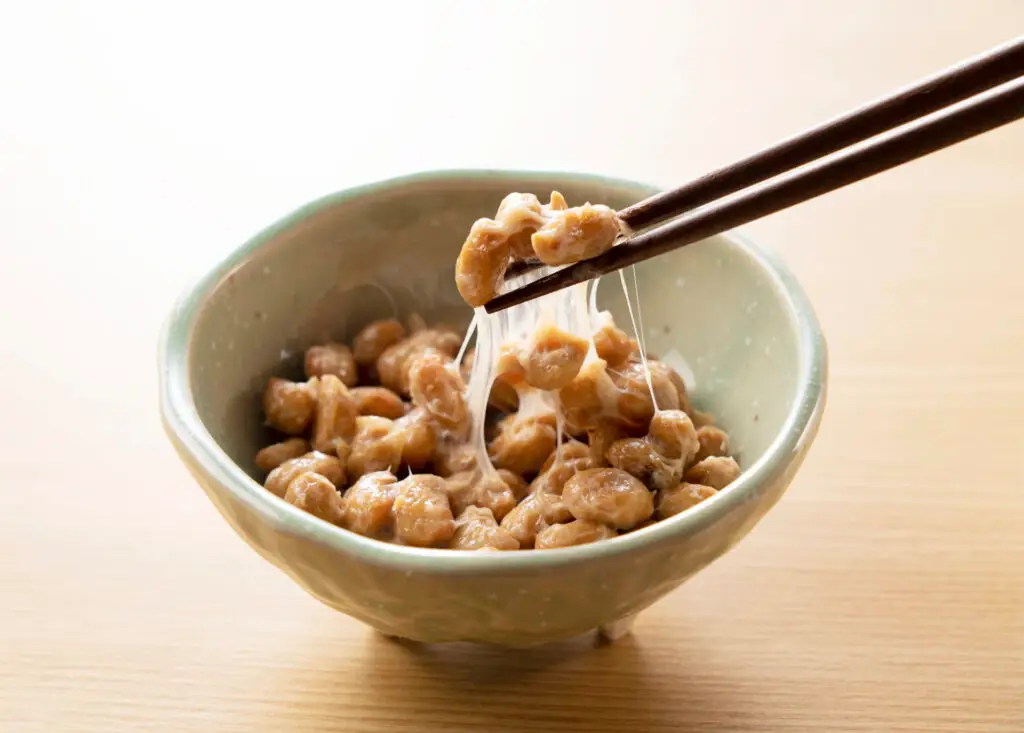
MK-7 is a form of vitamin K2 produced during fermentation and found in foods such as natto, a traditional Japanese fermented soybean food. MK-7 remains in the circulation longer than vitamin K1 (found mainly in leafy green vegetables and vegetable oils) and may be particularly effective at supporting vitamin K-dependent proteins outside the liver, including osteocalcin.
How the Study Was Designed
The researchers conducted two separate trials.
Study 1 included 60 healthy postmenopausal women between 50 and 69 years old. Participants were randomly assigned to receive 0, 50, 100, or 200 µg of MK-7 daily for four weeks. Their meals were tightly controlled and provided approximately 72 µg of total vitamin K per day, primarily from vitamin K1 and MK-4. MK-7-containing foods were excluded from the diet.
This design allowed the investigators to test whether adding different amounts of MK-7 could produce an effect beyond a standard dietary intake of vitamin K.
“The changes were generally more pronounced among women, especially older women, although beneficial effects were also observed in men.”
Study 2 included 120 healthy men and women between 20 and 69 years old. Participants received either a placebo or 100 µg of MK-7 daily for 12 weeks. After accounting for dropouts, 115 people completed the study. Unlike Study 1, participants ate their usual diets, although high-vitamin-K foods—including natto—were restricted.
Both trials were double-blind and randomized, meaning neither the participants nor the investigators knew who was receiving MK-7 until the studies were completed.
What the Researchers Found
In Study 1, the group receiving no additional MK-7 experienced a significant decline in the cOC/ucOC ratio after four weeks. Their ucOC levels increased, while cOC levels decreased. This occurred even though they were consuming the Japanese recommended intake of vitamin K for normal blood clotting.
The 50-µg dose appeared to prevent some of this decline, but the clearest benefits were seen with 100 and 200 µg daily. Both doses produced significantly better changes in the cOC/ucOC ratio than the no-MK-7 group.
Study 2 supported these findings. Participants taking 100 µg of MK-7 experienced:
- A significant reduction in ucOC
- An increase in the cOC/ucOC ratio
- Effects that appeared within four weeks and continued during the 12-week intake period
The changes were generally more pronounced among women, especially older women, although beneficial effects were also observed in men.
The researchers reported that ucOC levels in the MK-7 group fell below a Japanese threshold previously associated with vitamin K insufficiency in bone. However, this threshold is not universally used in clinical practice, and the study did not assess bone mineral density, bone strength, or fracture rates.
Importantly, the investigators found no clinically relevant changes in prothrombin time or the PT-INR, measures related to blood clotting. No adverse effects were attributed to the study products during the relatively short intervention periods.
→ Download the Full Text here.
→ Additional Vitamin K2 Study: Vitamin K and Bone Metabolism: A Review of the Latest Evidence in Preclinical Studies.
Reference
Inaba N, Sato T, Yamashita T. Low-Dose Daily Intake of Vitamin K(2) (Menaquinone-7) Improves Osteocalcin γ-Carboxylation: A Double-Blind, Randomized Controlled Trials. J Nutr Sci Vitaminol (Tokyo). 2015;61(6):471-80. doi: 10.3177/jnsv.61.471. PMID: 26875489.