Identifying, modulating, and resolving inflammation is an important part of clinical practice. Yet, all inflammation is not created equal. Acute inflammation is a necessary part of healing and is not the enemy in and of itself. It is only when inflammation becomes chronic and systemic that it is damaging to the body. This type of chronic inflammation is typically called inflammaging, a condition characterized by elevated levels of blood inflammatory markers in patients of advanced age.1
Potential mechanisms of action behind inflammaging include genetic susceptibility, visceral fat, increased gut permeability, alterations in the microbiota, cellular senescence, oxidative stress caused by mitochondrial dysfunction, immune cell dysregulation, and ongoing infections.1 Inflammaging is a risk factor for chronic kidney disease, diabetes mellitus, depression, dementia, and sarcopenia.1 In other words, dysregulated, unresolved inflammation is at the root of most chronic diseases. It can also lead to brain fog and tiredness.
Contributory vs. Primary Inflammation
Many diseases (atherosclerosis, metabolic syndrome) are associated with contributory inflammation. In other words, the inflammation makes the conditions worse. In other cases, the inflammation is primary, when an overactive or misdirected immune response is the main cause of tissue injury. Conditions that end with “itis,” such as rheumatoid arthritis and psoriatic arthritis, are some examples of primary inflammation, which directly drives pain, swelling, joint damage, and disability. Other examples of diseases mediated by primary inflammation include Crohn’s disease and ulcerative colitis, asthma, and autoimmune inflammatory diseases such as systemic lupus erythematosus (SLE).
Foundational Solutions to Inflammaging
Although dietary supplements are an important part of an inflammaging regimen, in my clinical practice, I also help patients address the root causes of inflammation. For example, I always keep in mind that if cortisol and insulin are ignored, supplements are just expensive placebos. This philosophy symbolizes a more personalized approach rather than assuming the same approach can be used for all patients. Foundational approaches to inflammaging include:
- Improving diet quality and eliminating inflammatory foods
- Supporting glycemic control
- Enhancing sleep
- Reducing stress and normalizing the HPA axis
- Reducing gut permeability
Supplements for Supporting A Healthy Inflammatory Response
In clinical practice, I use key supplements to support acute and ongoing inflammation in my patients. I maximize effectiveness by using forms of these supplements that are optimized for bioavailability.
Curcumin
Curcumin is also becoming known as a powerful nutrient that supports many areas of health, including the joints, brain, heart, liver, and skin. Curcumin supports a healthy inflammatory response and stabilizes muscle soreness after exercise.2 It’s also been studied extensively for its beneficial effects in supporting joint health.3 Other research shows curcumin can maintain the brain’s normal structure to support cognitive health.4 Curcumin maintains healthy levels of inflammatory mediators, including interleukin-1 beta (IL-1β) and tumor necrosis factor-alpha (TNF-α).5
Cannabidiol (CBD) + Beta-Caryophyllene
Hemp Oil Extract rich in CBD and other phytocannabinoids found in hempseed oil that are increasingly recognized for their beneficial effects on the body. CBD can promote the body’s natural inflammatory response, along with restful sleep, something that is lacking in patients experiencing pain.6,7
In addition to cannabidiol from hemp oil, beta-caryophyllene, the first known dietary cannabinoid. It is a sesquiterpene responsible for black pepper’s spiciness and is also found in cloves, rosemary, and cannabis. It was among the first hemp-derived substances shown to bind directly to endocannabinoid receptors, and it plays a role in a healthy inflammatory response.8
Omega-3s
The omega-3 fatty acids eicosapentaenoic acid (EPA) and docosahexaenoic acid (DHA) have long been known to provide significant health benefits. Only recently emerging is the molecular mechanism by which they support a healthy inflammatory response. It’s also clear that to trigger this anti-inflammatory mechanism, a sufficient amount of bioavailable omega-3s must be consumed.
After quantifying our patients’ omega-3 levels with a simple blood test, the next step is to supplement with a highly absorbable omega-3 supplement. High bioavailability increases the likelihood that the body receives sufficient EPA and DHA.
Conclusion
Inflammaging poses a threat to all our patients as they age. This type of inflammation can increase the risk of many diseases, as well as brain fog and tiredness. Combatting inflammaging is a key target of a healthy-aging regimen that includes lifestyle approaches such as restoring sleep, improving diet, and reducing stress. Curcumin, CBD, beta-caryophyllene, and omega-3 fatty acids supplements are at the cornerstone of supporting a healthy inflammatory response.
Note from the sponsor:
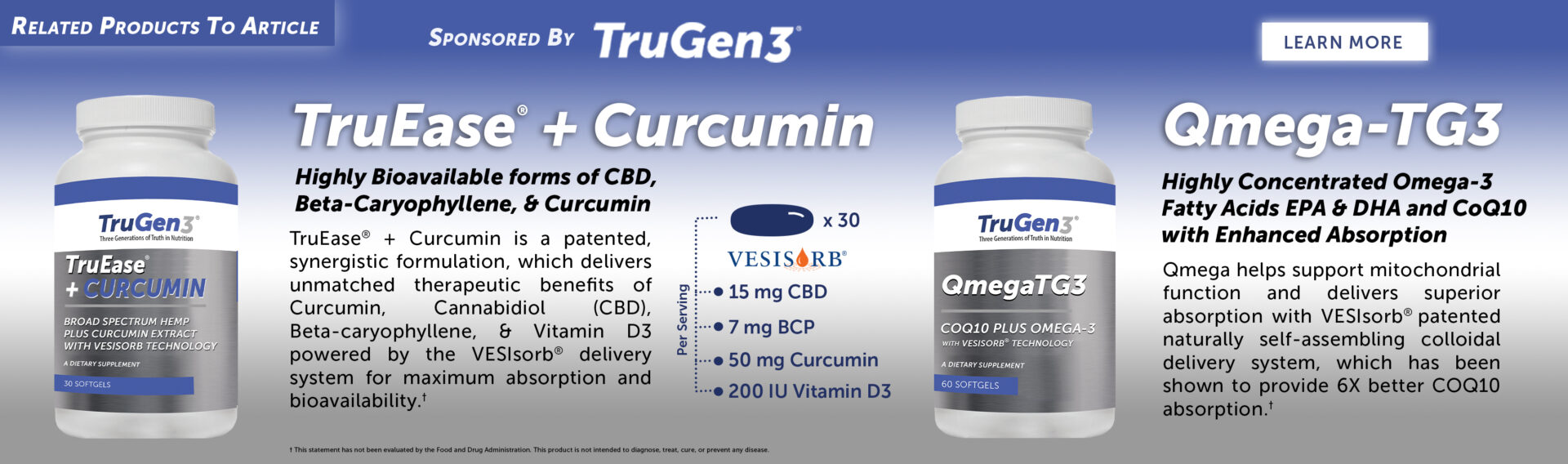
TruGen3 offers a highly bioavailable omega-3 supplement (QmegaTG3) that combines EPA, DHA, and coenzyme Q10 (CoQ10).
QmegaTG3 incorporates the VESIsorb® delivery system, a naturally self-assembling colloidal droplet system clinically proven to increase the absorption of nutritional supplements.9 Patented VESIsorb® technology is clinically proven to provide up to 6X more bioavailability via multiple PK studies measured in human subjects.10
This increased absorption can help nourish patients with their essential fatty acids, supporting a healthy inflammatory response.
References:
- Ferrucci L, Fabbri E. Inflammageing: chronic inflammation in ageing, cardiovascular disease, and frailty. Nat Rev Cardiol. 2018;15(9):505-522.
- Tanabe Y, Chino K, Sagayama H, et al. Effective Timing of Curcumin Ingestion to Attenuate Eccentric Exercise-Induced Muscle Soreness in Men. J Nutr Sci Vitaminol (Tokyo). 2019;65(1):82-89.
- Shep D, Khanwelkar C, Gade P, Karad S. Safety and efficacy of curcumin versus diclofenac in knee osteoarthritis: a randomized open-label parallel-arm study. Trials. 2019;20(1):214.
- Yi LT, Dong SQ, Wang SS, et al. Curcumin attenuates cognitive impairment by enhancing autophagy in chemotherapy. Neurobiol Dis. 2020;136:104715.
- Yaikwawong M, Kamdee K, Chuengsamarn S. Curcumin Attenuates Liver Steatosis via Antioxidant and Anti-Inflammatory Pathways in Obese Patients with Type 2 Diabetes Mellitus: A Randomized Controlled Trial. Int J Mol Sci. 2025;26(19).
- Irving PM, Iqbal T, Nwokolo C, et al. A Randomized, Double-blind, Placebo-controlled, Parallel-group, Pilot Study of Cannabidiol-rich Botanical Extract in the Symptomatic Treatment of Ulcerative Colitis. Inflamm Bowel Dis. 2018;24(4):714-724.
- Shannon S, Opila-Lehman J. Effectiveness of Cannabidiol Oil for Pediatric Anxiety and Insomnia as Part of Posttraumatic Stress Disorder: A Case Report. Perm J. 2016;20(4):16-005.
- Mazzantini C, El Bourji Z, Parisio C, et al. Anti-Inflammatory Properties of Cannabidiol and Beta-Caryophyllene Alone or Combined in an In Vitro Inflammation Model. Pharmaceuticals (Basel). 2024;17(4).
- Knaub K, Sartorius T, Dharsono T, Wacker R, Wilhelm M, Schön C. A Novel Self-Emulsifying Drug Delivery System (SEDDS) Based on VESIsorb(®) Formulation Technology Improving the Oral Bioavailability of Cannabidiol in Healthy Subjects. Molecules. 2019;24(16).
- Liu ZX, Artmann C. Relative bioavailability comparison of different coenzyme Q10 formulations with a novel delivery system. Altern Ther Health Med. 2009;15(2):42-46.