As clinicians, we spend a career helping patients successfully reach work retirement. From a wealth perspective our annual retirement contributions should be paralleled by an equal commitment to health saving accounts, calling it a bonus to our physiological reserve. Summer is the time each year when such investments into wellness appear more feasible than during other seasons.
Summer is bookended by Memorial Day and Labor Day, functions as the body’s equivalent of a pension contribution: a window when sunlight, activity, and lighter schedules let patients rebuild the reserves that carry them through the rest of the year. Vitamin D synthesis gets most of the attention. Stress-adaptive capacity deserves equal billing, and the endocannabinoid system sits at the center of that capacity.
The Reserve Tank Clinicians Rarely Measure
Patients who describe themselves as “running on empty” after a hard year are often describing dysregulated hypothalamic-pituitary-adrenal (HPA) axis output rather than adrenal gland failure itself. The term “adrenal fatigue” circulates widely among patients, but the physiology it points toward is real: chronic stress exposure blunts cortisol rhythm and taxes the neuroendocrine circuits that govern recovery. Ethan Russo’s clinical endocannabinoid deficiency (CECD) model offers a complementary framework. Russo proposed that migraine, fibromyalgia, and irritable bowel syndrome share an underlying deficit in endocannabinoid tone, a deficit that leaves patients with reduced buffering capacity against pain, mood disruption, and stress.[1,2] The model has matured since 2004 and continues to attract supporting mechanistic data, which gives clinicians a physiologic anchor for patients who present as chronically under-resourced.[2]
Two Plant Compounds, Two Complementary Mechanisms
Cannabidiol (CBD) and beta-caryophyllene (BCP) approach the endocannabinoid system from different angles, which makes them a logical pairing for a summer support protocol.
BCP is a dietary sesquiterpene, also found in black pepper and hops, that acts as a selective CB2 receptor agonist. In animal models, systemic BCP produced anxiolytic and antidepressant-like effects across multiple validated behavioral tests, effects that were fully blocked by a CB2 antagonist, confirming the receptor-specific mechanism.[3] Mechanistic work since has linked CB2 stimulation to normalized corticosterone output and reduced glial reactivity in stress-sensitive brain regions, giving BCP a plausible role in supporting a calmer stress response.[4]
CBD works more broadly, modulating anandamide signaling and interacting with serotonergic and TRPV1 pathways rather than directly agonizing CB1 or CB2. Human data on CBD and the physiologic stress response remain mixed. Some laboratory studies show CBD blunting subjective anxiety and cortisol reactivity during simulated public speaking and social stress paradigms, while others find no significant separation from placebo on cortisol itself.[5,6,7] What the literature supports more consistently is CBD’s tolerability and its favorable safety profile across repeated dosing, which matters for a supplement intended for daily, ongoing use rather than acute intervention.[6]
Where Sports Activity Fits In
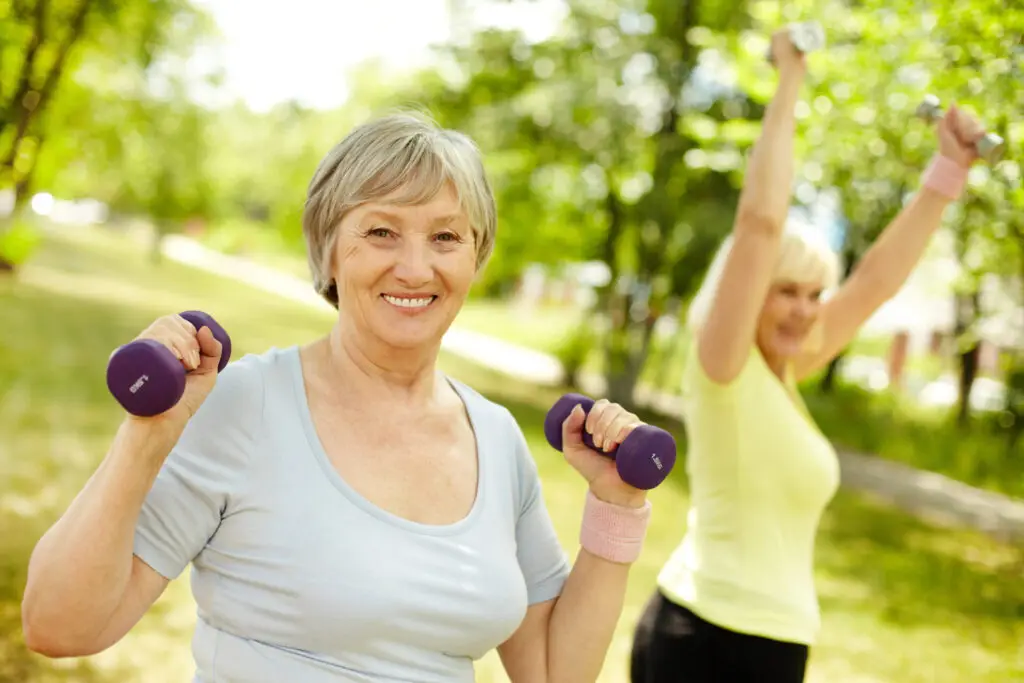
Summer means more movement: more training, more weekend tournaments, more time on the trail or the court. Exercise-induced inflammation and delayed-onset muscle soreness are the physiologic cost of that activity. CBD’s anti-inflammatory and antioxidant properties have generated real interest in the sports recovery space, and a 2023 review noted that CBD dosed around 10 mg/kg attenuated IL-6, IL-1, and TNF-alpha following fatiguing eccentric exercise.[8] Controlled trials in trained athletes have been inconsistent on hard performance and inflammatory endpoints, which is worth communicating honestly to patients rather than overselling the recovery claim.[9,10] The more defensible position, and the one that fits a summer wellness conversation, is CBD and BCP supporting the recovery environment around training rather than replacing it.
Summer means more movement: more training, more weekend tournaments, more time on the trail or the court. Exercise-induced inflammation and delayed-onset muscle soreness are the physiologic cost of that activity. CBD’s anti-inflammatory and antioxidant properties have generated real interest in the sports recovery space, and a 2023 review noted that CBD dosed around 10 mg/kg attenuated IL-6, IL-1, and TNF-alpha following fatiguing eccentric exercise.
The Clinical Opportunity
Summer gives patients unusual permission to invest in themselves: more daylight, more time outdoors, a natural pause in the academic and corporate calendar. That is precisely the window to introduce daily endocannabinoid support rather than waiting for a stress-related flare in October. Framing CBD and BCP as part of a preventive, seasonal reserve-building strategy, alongside vitamin D optimization and movement, gives clinicians a natural, evidence-anchored entry point into a conversation patients are already primed to have. It is so vitally important to remind our patients that we are all born with an endocannabinoid system and investing in sustain endocannabinoid tone that has an impact on stress responsiveness, inflammatory, immune and ubiquitous processes throughout their body.
References
- Russo, E.B. (2004) ‘Clinical endocannabinoid deficiency (CECD): can this concept explain therapeutic benefits of cannabis in migraine, fibromyalgia, irritable bowel syndrome and other treatment-resistant conditions?’, Neuroendocrinology Letters, 25(1-2), pp. 31-39.
- Russo, E.B. (2016) ‘Clinical endocannabinoid deficiency reconsidered: current research supports the theory in migraine, fibromyalgia, irritable bowel, and other treatment-resistant syndromes’, Cannabis and Cannabinoid Research, 1(1), pp. 154-165.
- Bahi, A. et al. (2014) ‘β-Caryophyllene, a CB2 receptor agonist produces multiple behavioral changes relevant to anxiety and depression in mice’, Physiology & Behavior, 135, pp. 119-124.
- Fiorenzani, P. et al. (2024) ‘Beta-caryophyllene, a cannabinoid receptor type 2 selective agonist, in emotional and cognitive disorders’, International Journal of Molecular Sciences, 25(6), 3203.
- Bergamaschi, M.M. et al. (2011) ‘Cannabidiol reduces the anxiety induced by simulated public speaking in treatment-naïve social phobia patients’, Neuropsychopharmacology, 36(6), pp. 1219-1226.
- Larsen, C. and Shahinas, J. (2020) ‘Dosage, efficacy and safety of cannabidiol administration in adults: a systematic review of human trials’, Journal of Clinical Medicine Research, 12(3), pp. 129-141.
- Appiah-Kusi, E. et al. (2020) ‘Effects of short-term cannabidiol treatment on response to social stress in subjects at clinical high risk of developing psychosis’, Psychopharmacology, 237(4), pp. 1121-1130.
- Rojas-Valverde, D. (2023) ‘Cannabidiol in sports: insights on how CBD could improve performance and recovery’, Frontiers in Pharmacology, 14, 1210202.
- Isenmann, E. et al. (2024) ‘Influence of short-term chronic oral cannabidiol application on muscle recovery and performance after an intensive training protocol: a randomized double-blind crossover study’, European Journal of Applied Physiology.
- Kasper, A.M. et al. (2022) ‘Acute supplementation with cannabidiol does not attenuate inflammation or improve measures of performance following strenuous exercise’, Nutrients, 14(9), 1785.