stay updated with our newsletter

Clinical Trial Confirms Vitamin D and Fish Oil Help Cut Risk of Autoimmune Disease

Autoimmune diseases continue to rise, but groundbreaking evidence from the VITAL study offers hope for prevention. Published in The BMJ, this large-scale trial of over 25,000 older adults found that vitamin D3 supplementation (2,000 IU/day) reduced autoimmune disease risk by 22%, with effects strengthening to 39% after two years of use. Marine omega-3s (1g/day) showed additional protective benefits, especially in patients with family history. For integrative practitioners, these findings validate long-standing protocols using familiar, safe doses of vitamin D and fish oil as foundational autoimmune prevention strategies in patients over 50.

The Cascade and Its Limits: Interferon, Homeostatic Capacity, and Treatment Variability in Lupus (Part 2)

Systemic lupus erythematosus does not emerge randomly in patients carrying latent EBV. In this Part 2 of our Systems Homeostasis series, we trace how EBNA2-driven B cell reprogramming, the IFN-I amplification loop, and depleted “circuit breakers” such as IL‑10, Tregs, DNase activity, and antioxidant capacity converge to determine disease expression and treatment response. Clinicians gain a practical framework for reading IFN-I signatures and upstream signal environment data long before full diagnostic criteria are met.

How Chronic Stress Enables EBV-Driven Autoimmunity in Lupus (Part 1)

This clinical briefing connects recent mechanistic findings on EBV reprogramming of autoreactive B cells to HPA axis–mediated failure of cytotoxic surveillance and enteric immune dysfunction. It outlines measurable upstream markers — diurnal cortisol/DHEA profiles (Fluids-IQ SHP), circadian inversion patterns, and midday enteric melatonin — that can identify patients at elevated risk for EBV-driven autoimmunity and inform earlier, mechanism-targeted interventions.

Clinical Commentary: Post-Viral COVID Long-Haul Treatment Mirrors Chronic Fatigue Syndrome Therapy

This interview with Jacob Teitelbaum, MD, Chronic Fatigue Syndrome and fibromyalgia (CFS/FMS) researcher and board-certified internist explores the commonalities among CFS/FMS and post-viral COVID (aka Long-Haul Syndrome) and relapse symptoms seen in patients after viral infection. As described in a recent case study in Clinical Microbial and Infections, persistent symptomsRead

DISCOVERY: Immune Defense Guidance System Identified

A new mice experimental study shows that at the kick off of the immune response, the molecule sphingosine 1 phosphate (S1P) mobilizes immune cells into the bloodstream to target infection sites and then rapidly shifts position. Researchers say this indirectly amplifies the attack on foreign microbes or the body’s ownRead

Glutathione Precursor GlyNAC Reverses Premature Aging with HIV

A new study from Baylor College of Medicine shows that findings supplementing GlyNAC, a combination of glycine and N-acetylcysteine, corrects glutathione deficiencies in humans with HIV, thus reversing premature aging, and could have implications beyond HIV, pending further investigations. Premature aging in people with HIV is now recognized as aRead

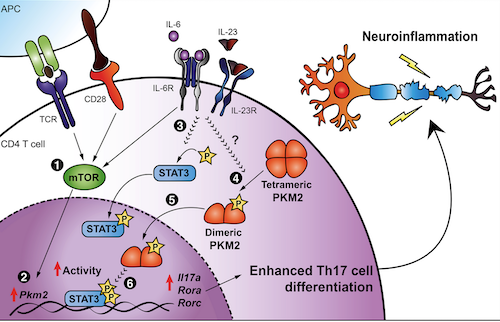
Enzyme PKM2 promotes Th17 Cell Differentiation and Autoimmune Inflammation

autoimmune inflammation

An enzyme associated with energy production in cells also participates in the differentiation of immune cells involved in exacerbated autoimmune inflammation. The discovery could lead to more effective treatment for autoimmune diseases. Scientists affiliated with the Center for Research on Inflammatory Diseases (CRID http://crid.fmrp.usp.br), hosted by the University of SãoRead

Exploratory Study: N-acetylcysteine Associated With Increased Cerebral Glucose Metabolism in Patients With Multiple Sclerosis

N-acetylcysteine (NAC), the naturally occurring molecule that replenishes antioxidants, shows improved brain metabolism and self-reported improvements in cognitive function in patients with multiple sclerosis, according to a study published in the journal, Frontiers in Neurology. The study found improvements in brain metabolism, particularly in areas that support cognition such asRead